
Fairway Finds
Three Home Golf Simulators Worth Making Room For
From a portable garage setup to a dedicated simulator room, three U.S. picks and what they can actually do for your game.
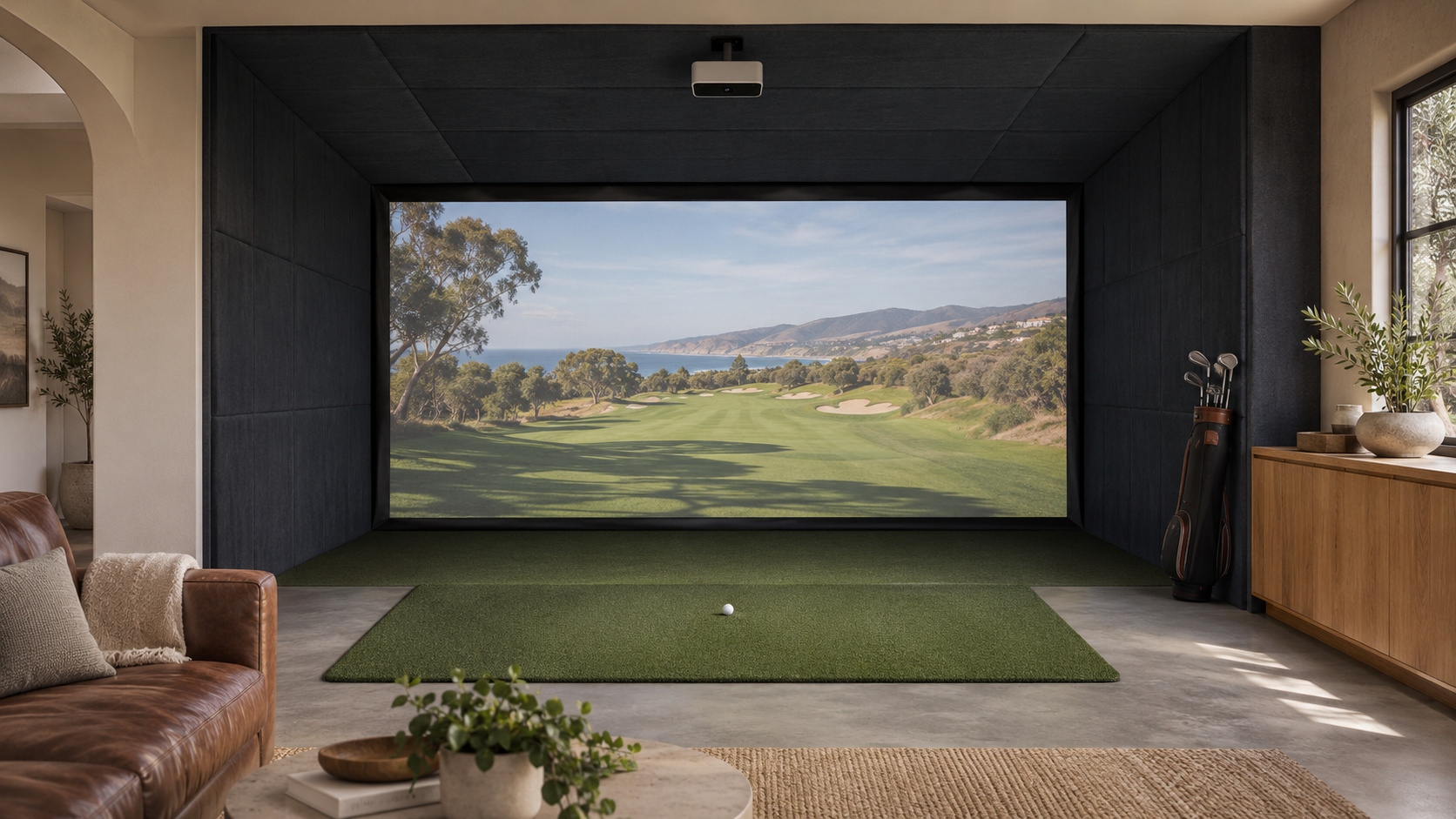
Somewhere between the first rain delay and the third Instagram reel of a guy playing Pebble Beach in his socks, you start eyeing the garage differently. The National Golf Foundation counted 8.1 million U.S. simulator or screen-golf users in 2024. That includes commercial bays, not just homes. The appeal is easy to see: twenty minutes of practice after work, a round with friends after dark, and nobody ahead of you reading a four-footer from both sides.
These are my three U.S. picks by budget and setup, based on published specifications rather than a hands-on test or a sales ranking.
1. Rapsodo MLM2PRO: The garage starter
The MLM2PRO lists at $699.99 before discounts. Add a phone or tablet, mat and safe net or screen. The payoff is swing video and shot feedback without dedicating a room to it. Basic practice is free; simulated course play is part of the Core plan at $199.99 a year. The catch is room depth. Rapsodo calls for 6.5 to 8.5 feet behind the ball, plus at least eight feet from the ball to the net. That’s about 14.5 to 16.5 feet from the net to the device, before extra swing and safety clearance. It also needs compatible RPT-marked balls to measure spin. Before ordering, take a full driver swing in the proposed spot. The garage door opener gets a vote.
2. Garmin Approach R50: The all-in-one
Garmin’s R50 has a U.S. list price of $4,999.99. Three cameras track shots, and the built-in 10-inch touchscreen runs Garmin’s own simulator without a gaming PC. You still need a safe hitting setup. Add a compatible display or projector if you want everyone to see the approach you just sent into the ocean. Home Tee Hero course play needs a Garmin Golf membership, which Garmin lists at $99.99 a year.
3. Trackman iO: The dedicated room
Trackman iO Home starts at $13,995 for the tech. Trackman quotes $19,200 to $50,000-plus for complete setups. The ceiling-mounted unit keeps the hitting area clear and measures spin without special balls. It makes sense for a permanent room that gets used often. Budget for the screen, enclosure, projector and installation, plus Home software at $700 a year after the included first year. Get a room-specific quote before you start moving walls.
Will it help your game?
Yes, if you give it a job. Hit ten shots with each wedge, record the middle carry distance and look at how wide the misses spread. Repeat with the same ball and settings, then check what transfers outdoors. Research on indoor launch monitors found some measurements can differ between devices, so don’t rebuild your swing over one number.
A mat can let a fat shot look better than it deserves, and a screen can’t teach you what a buried lie or a downhill putt feels like. I’d rent a bay twice before buying. Bring your own clubs and spend half the time practicing. If the numbers still keep you coming back after the novelty wears off, then start measuring the garage.
Image credits
The lead image is an original editorial illustration, not a photograph of any reviewed product. The supporting photographs show different real setups, not necessarily the models discussed.
Chief Master Sgt. Jay Harris tries a simulator at Vandenberg Space Force Base, California. Tiarra Sibley / U.S. Space Force, public domain.

An indoor simulator bay in Mississauga, Ontario. swingzone / Pexels · Pexels License.
An indoor practice studio at Culford School, England. Tommyraiks2 · CC BY-SA 4.0, original image unchanged.

An indoor golf bay in Japan. Syced / Wikimedia Commons · CC0 1.0.
