
A Round With...
A Round With… Clint Eastwood
A day at Tehama with the actor, filmmaker and golfer who liked to keep things moving
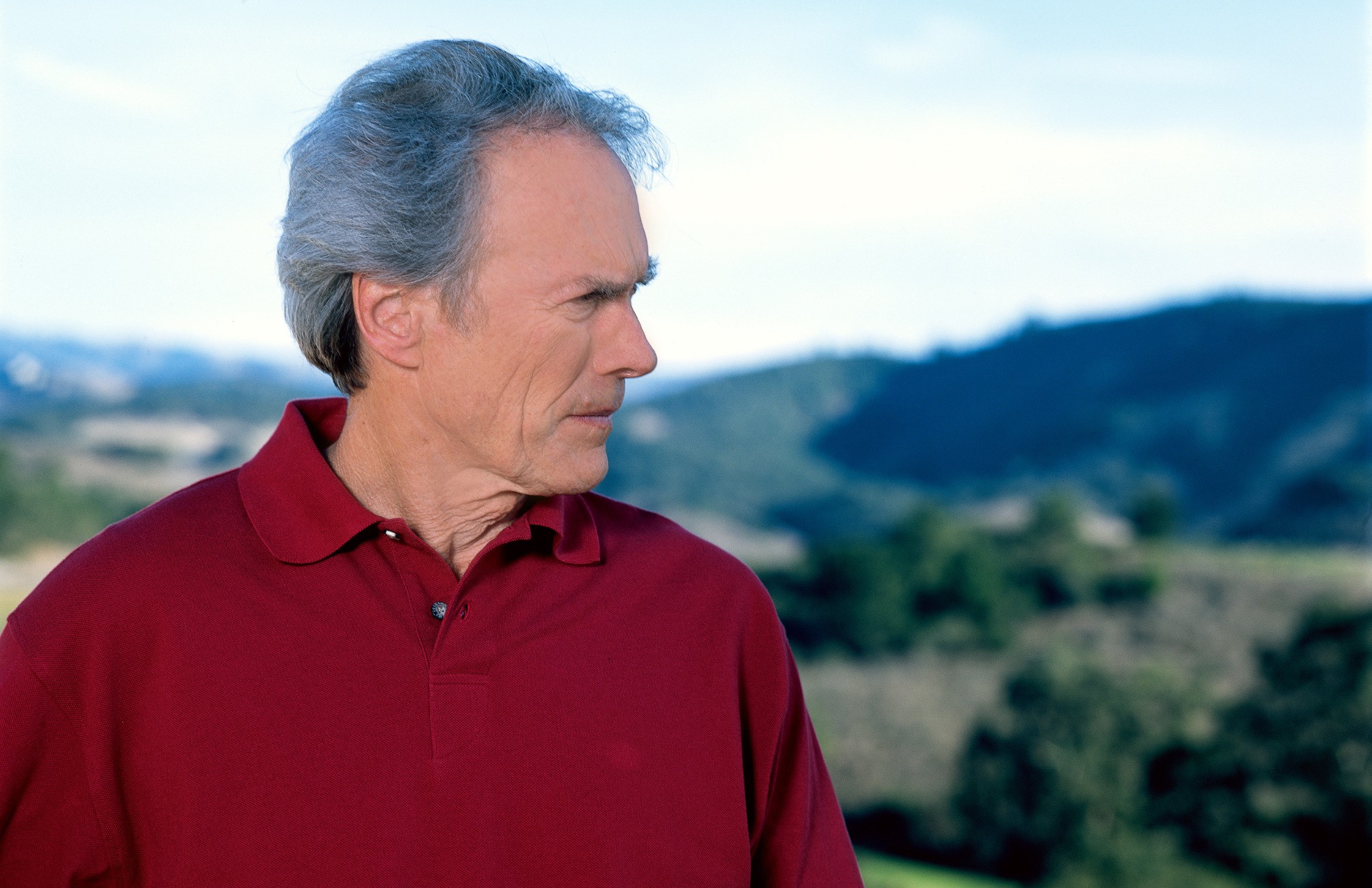
Original interview by Wil Barnes • Photography by Dean Kirkland
From the Affluent Golfer archive, June–July 2002. This edited archive feature revisits our original interview. Ages, relationships, golf equipment and other contemporary references reflect that time.
Clint Eastwood came along the cart path at Tehama, his private golf club in Carmel, looking for Dina. She was down at the putting green, working on her chipping.
“Thanks Wil, how are you?” he asked, turning to look. “Oh there she is. Now, there’s an affluent golfer.”
A smile followed the joke. Then he walked over, put an arm around her and began helping with her grip.
It was an easy introduction to a man whose screen presence could fill a room before he said a word. At 72, Eastwood still had the familiar bearing of the westerns and the quiet delivery of his most memorable characters. In person, though, there was no hurry in his movements. The conversation felt comfortable, as if the visitors had been around for years.
On a golf course, his friends knew, the pace could be a different matter.
Keep it moving
“Clint likes to play fast,” said his longtime friend and consultant Dan Tibbitts. “During the AT&T he sometimes gets a little frustrated because of the pace of play. We always seem to have a problem over at Poppy Hills.”
The game still had a firm place in Eastwood’s life. His handicap at the time was 16. A new driver, a bright red Cherry Bomb, had recently found its way into the bag and was helping him off the tee. He had played throughout Scotland and Ireland, and a home in Hawaii gave him another place to enjoy his golf.
His playing partners ranged from fellow entertainers to tour professionals and politicians. Famous company did not necessarily make for a memorable round, at least not in the way a golfer might hope.
“One of the most miserable days of my golfing life,” he said of a round with former President Bill Clinton. The setting was Washington, D.C.; the weather was cold and rainy. “I got the invitation so I played. But it wasn’t all that much fun.”
At Tehama, the company was often less recognizable and more familiar: old friends and fellow members, people far removed from a movie premiere or a tournament’s celebrity pairing sheet.
The American Film Institute’s golf tournament at Riviera Country Club offered another kind of gathering. It supported a school for aspiring filmmakers, and some of its students eventually found themselves working on Eastwood’s sets.
“It’s a real nice event,” he said. “Besides it’s a chance to get together with good friends, like Jimmy Woods, little Joey Pesci, Jack, play a wonderful golf course and enjoy a beautiful day outside. It doesn’t get much better than that.”
He also spoke about a friend whose absence was still felt, Jack Lemmon.
“He was a nice man. I’ll miss him on the golf course and I will miss him on the stage. Jack was very talented and he sure loved to play golf.”
At home in Carmel
Golf was one part of a life rooted in Carmel. Tehama reflected Eastwood’s interest in the land around his home and his desire to protect its hillsides and valleys from dense development. The original feature described that concern as a reason for his purchase of the old Williams Ranch and parts of Monterra Ranch.
His involvement in the town had taken a more public turn when he decided to run for mayor. Tibbitts remembered hearing the idea while the two were skiing in Sun Valley.
“I just about fell off the chair lift.”
Eastwood’s campaign included small gatherings with local residents, with teas and coffees giving him a way to talk about the things he wanted to help change. One encounter stayed with him: an elderly woman working in her garden.
“I remember one time walking up this elderly lady who was working in her garden,” he recalled. “I said hello, I’m Clint Eastwood, I’m running for mayor.”
She was 104. When he asked her secret, she told him she always wore a hat outdoors.
“I wear a hat outside almost all the time nowadays,” he said, smiling.
Away from filming, he divided his time between Carmel and Hawaii. In Carmel, he could sometimes be found at Mission Ranch, his restaurant and inn, playing the piano and singing blues or jazz for the people in the room.
He paid attention to the smaller details, too. During the interview over lunch, Eastwood stopped the food and beverage director to ask about new bread for the restaurant.
“These are too doughy,” he said. “See about getting some San Francisco breads.”
It was a brief interruption, but an unmistakable glimpse of the owner at work.
Making his own choices
The same attention and independence ran through the conversation about filmmaking. Eastwood’s route from Rawhide to his own production company, Malpaso, had given him room to choose his material and the way he worked.
“I feel very close to the western,” he said. He regarded it as one of America’s distinctive art forms, alongside jazz and blues.
He also cared about making a film without waste. Talking about Bronco Billy, he recalled working with a modest budget and a clear plan.
“We knew what we wanted to shoot and we didn’t waste anything.”
When the conversation turned to influences and expectations, he was equally direct.
“Anytime someone tells me the trend is such and such, I go the opposite direction. I hate the idea of trends.”
That independence helped explain a career that could move from the hard edge of Dirty Harry to the quieter emotions of The Bridges of Madison County. The familiar screen image was part of the story, but it was not the whole of it.
“Most people, who’ll remember me, if at all, will remember me as an action guy, which is OK. There’s nothing wrong with that. But there will be a certain group, which will remember me for the other films, the ones where I took a few chances. At least, I like to think so.”
Back at Tehama, the picture was simpler: a man checking on his wife’s chipping, making time for old friends and keeping an eye on the next detail that needed his attention.
On the course, Tibbitts had made the preference clear: Clint liked to play fast.
Photograph credits
CLINT-5: Clint Eastwood. Photograph by Dean Kirkland.
Clint 135: Clint Eastwood in conversation. Photograph by Dean Kirkland.
Clint hikein1: The original cover photograph, with a hand-lettered Pebble Beach sign. Photograph by Dean Kirkland.
Clint-6: Clint Eastwood. Photograph by Dean Kirkland.
Clint 134: Clint Eastwood in conversation. Photograph by Dean Kirkland.
Clint 142: Another moment from the interview. Photograph by Dean Kirkland.
Dean n Clint1: From Dean Kirkland’s archive: beside the golf carts with Clint Eastwood. Courtesy of Dean Kirkland.